

Opening a professional fight gym in Texas, Florida, or New York involves more than choosing a large commercial unit and filling it with training gear. Each facility needs a practical balance of flooring, striking equipment, grappling space, storage, conditioning areas, and competition-focused equipment.
The exact setup will depend on the size of the gym, the disciplines being offered, and the type of members expected. A boxing-focused facility may prioritize rings and bag stations, while an MMA gym may need more mat space and cage training. Planning these elements early can help owners avoid crowding, unnecessary purchases, and expensive layout changes later.
Begin With the Training Program
Before purchasing equipment, decide which disciplines will form the core of the business. Boxing, MMA, Muay Thai, BJJ, and wrestling all use space differently.
A gym focused mainly on boxing may need more heavy bags, speed equipment, and ring access. MMA and BJJ facilities usually require larger open mat areas for grappling, takedowns, and ground training.
If the gym plans to offer several disciplines, owners should estimate which classes will run simultaneously. This makes it easier to divide the facility into practical zones rather than allowing different activities to compete for the same space.
Plan Equipment Around the Facility Size
Commercial spaces vary considerably across Texas, Florida, and New York. A large warehouse-style property may provide room for separate striking, grappling, and conditioning zones, while a smaller urban location may require greater flexibility.
Working with an MMA gym equipment supplier USA can help owners consider several equipment categories together, including mats, bags, protective gear, rings, cages, and training accessories.
Before ordering, measure usable floor space rather than relying on the property’s total square footage. Offices, bathrooms, columns, reception areas, and storage rooms can significantly reduce the amount of room available for active training.
Give Flooring Enough Attention
Flooring should be one of the first major decisions. MMA, BJJ, and wrestling involve repeated ground contact and takedowns, so those areas need surfaces suitable for grappling.
Boxing and conditioning zones may require different flooring characteristics. Stability matters for footwork, while impact management becomes more important in areas used for throws or ground drills.
Owners should also consider cleaning and maintenance. High-volume commercial gyms may host several classes every day, which means floors need to remain practical to clean and inspect.
Build a Functional Striking Area
Heavy bags are essential for boxing, Muay Thai, and MMA, but they require more space than their physical size suggests. Athletes need enough room to move around each bag without interfering with nearby users.
Different bag types can support different training goals. Long bags may be useful for kicking, while angle bags can support uppercuts and varied combinations.
Coaches also need focus mitts, kick shields, body protectors, and enough open floor space for partner work. Mounting systems should be selected based on the structure of the building and the number of bags required.
Decide Whether an MMA Cage Is Necessary
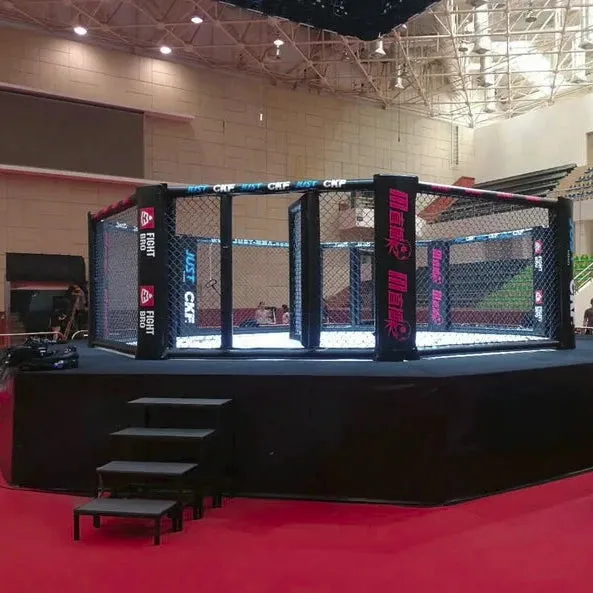
An MMA Cage can provide valuable training opportunities for gyms that prepare athletes for mixed martial arts competition. Fighters can practice clinching, takedown defense, escapes, fence control, and positional work in a realistic environment.
However, a cage uses a considerable amount of floor space. The decision should be based on training priorities rather than simply adding an impressive feature to the facility.
Owners should measure the full external footprint and leave enough room around the structure for coaches, cleaning, athlete access, and safe movement.
Include Strength and Conditioning Space
Combat athletes often need strength, mobility, and conditioning work alongside technical training. The gym does not necessarily need a large traditional weight room, but it should provide enough equipment for the programs being offered.
Free weights, resistance tools, sleds, medicine balls, or basic functional training equipment may be useful depending on the coaching approach.
This area should ideally remain separate from active sparring and grappling zones so athletes are not moving weights across crowded training floors.
Organize Storage From the Start
Commercial fight gyms accumulate equipment quickly. Gloves, pads, shin guards, headgear, wraps, cleaning supplies, and spare gear all need dedicated storage.
Without a clear storage system, equipment can spread into walkways and training areas. Wall-mounted racks, shelving, bins, and separate storage rooms can help keep the gym organized.
Frequently used items should remain easy for coaches to access, while replacement equipment can be stored away from the busiest parts of the facility.
Account for Climate and Daily Operations
Location can influence day-to-day planning. Facilities in warmer areas such as Texas and Florida may place greater emphasis on ventilation and maintaining comfortable training conditions.
In densely populated areas of New York, floor efficiency may become a bigger priority because commercial space can be more limited.
Regardless of location, the layout should support smooth movement between reception, changing areas, training zones, storage, and exits without unnecessary congestion.
Leave Space for Future Growth
A new gym may not need every possible piece of equipment before opening. Owners can begin with core training requirements and expand as membership grows.
Future additions could include more bags, additional mat space, a larger cage, or specialized conditioning equipment.
Leaving some flexibility in the original layout can make these upgrades easier without requiring a complete redesign.
Conclusion
Building a professional fight gym in Texas, Florida, or New York requires careful equipment planning based on training style, available space, class size, and long-term goals. Flooring, striking areas, cage space, conditioning equipment, and storage should all work together as part of one practical layout.
By measuring carefully and purchasing equipment around real training needs, owners can create a facility that supports coaches and athletes from the beginning. A flexible design also makes it easier to expand equipment, adjust class formats, and accommodate growing membership without creating unnecessary congestion.